Simple Project Management: A Practical Framework for Small Teams and Startups
Learn how to implement simple, effective project management without complex software. A step-by-step framework for small teams and startups.

Rasmus Rowbotham
Founder of Foundbase and experienced entrepreneur with over 10 years of experience in building and scaling businesses.
What is Simple Project Management?
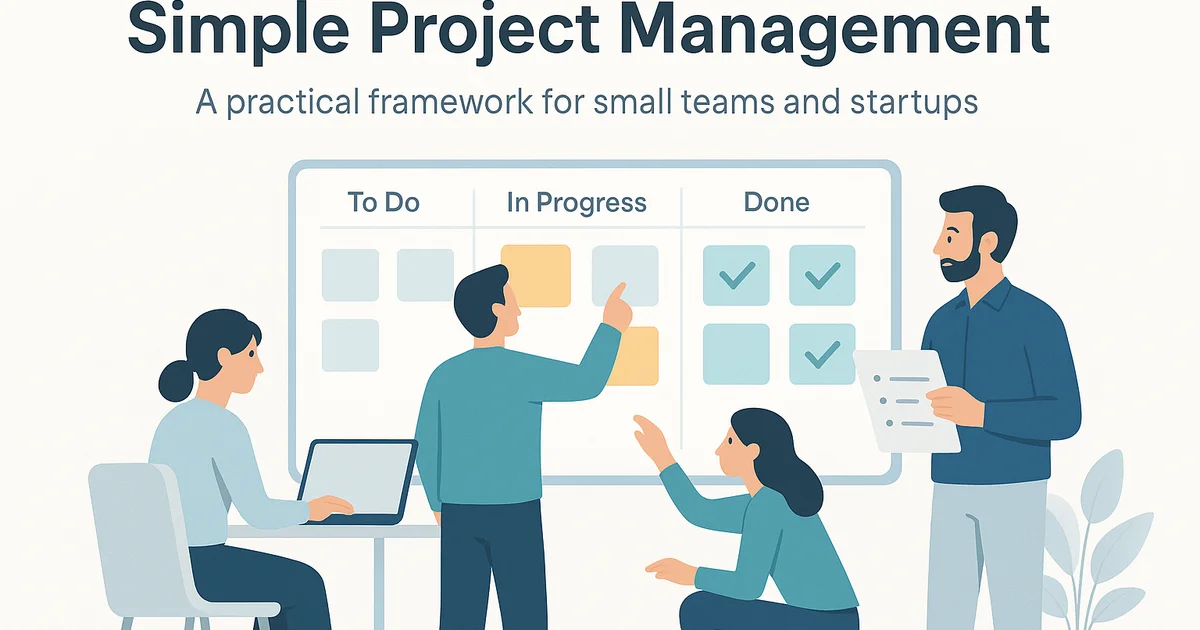
Simple project management is about achieving maximum clarity with minimal process overhead. The goal is to maintain momentum without drowning in reports, dashboards, and unnecessary meetings. In small teams and startups, flexibility matters more than heavy frameworks like PRINCE2 or PMBOK. This method emphasizes quick implementation, clear accountability, and continuous progress.
The Three-Layer Framework
An effective simple project management model is built around three layers: Overview, Execution, and Evaluation.
1. Overview: Setting the frame
- Goal: Define one clear, measurable objective per project, with a deadline.
- Scope: Note what is included—and what isn’t. Keep it to a single-page document.
- Roles: Specify who owns decisions, who executes tasks, and who needs to be informed.
Example: A team aims to launch a new landing page. Goal: 'Publish the page by December 1st with at least 20 leads generated within the first week.'
2. Execution: Daily structure
The biggest challenge in small teams is losing rhythm. Without a consistent workflow, tasks stall. Use this simple cadence:
- Daily standup: 10 minutes to answer three questions: What did I complete yesterday? What’s my focus today? What’s blocking progress?
- Weekly review: 30-minute session to assess milestone status, reprioritize tasks, and surface risks.
- Visual board: Use a simple Kanban with 'To Do', 'In Progress', and 'Done'.
A tool like Foundbase can be used to set up a lightweight project management structure without complex integrations.
3. Evaluation: Continuous improvement
After each project, hold a short 'retro' meeting. Use the following structure:
- What worked well?
- What went wrong?
- What should we change next time?
Document key insights in a shared space to accelerate future project cycles.
Example Workflow: Simple Marketing Campaign
Goal: Launch and send an email campaign within 7 days.
Step 1: Plan – define audience, message, CTA.
Step 2: Execute – write, design, and test internally.
Step 3: Evaluate – measure open rate and conversions.
Step 4: Optimize – adjust based on insights.
Checklist for Simple Project Management
- Is the goal clear and measurable?
- Are roles defined?
- Is the timeline realistic?
- Is project status visible to everyone?
- Is a closing review scheduled?
Benefits of Simple Project Management
- Faster decisions: Less coordination means more progress.
- Greater accountability: Clear ownership eliminates confusion.
- Reduced stress: No unnecessary reporting overhead.
Setting It Up in Foundbase
You can create a simple project setup in Foundbase within minutes. Create a project, add tasks to a Kanban board, assign owners, and use comments for quick feedback instead of long email threads.
Conclusion
Simple project management is not about removing structure—it’s about finding the minimal structure that enables clarity without friction. Once teams master this balance, productivity and satisfaction rise dramatically.
Start for free with a simple project management tool: Try Foundbase for free.
Frequently asked questions
Q: How does simple project management differ from traditional methods?
It prioritizes clarity and speed over process-heavy documentation. Instead of complex templates, teams use lightweight visual tools and short review cycles to stay on track.
Q: What tools are best for simple project management?
Lightweight tools like Foundbase, Trello, or Notion work best. They enable fast setup and intuitive tracking without requiring advanced training or IT resources.
Q: How can small teams maintain consistency without bureaucracy?
By using short daily standups and weekly check-ins to maintain alignment. Consistent communication replaces the need for heavy governance structures.
Related guides

Project management for non-tech startups: Simple strategies
Learn how non-tech startups can effectively manage projects. From planning to tools, get comprehensive insights and strategies.
Rasmus Rowbotham
Project management for small startups: Essential guide
Learn how to manage projects effectively in small startups. This expert guide provides essential techniques and tips for success.
Rasmus Rowbotham
Project management tips for new startups: Strategic insights
Are you a new startup? Discover essential project management tips to propel your business forward. Gain insights into effective strategies and planning.
Rasmus Rowbotham