Project management with OKR for startups: Achieve goals
Learn project management with OKR for startups to achieve goals effectively. Discover how to implement OKR in your startup today.

Rasmus Rowbotham
Founder of Foundbase and experienced entrepreneur with over 10 years of experience in building and scaling businesses.
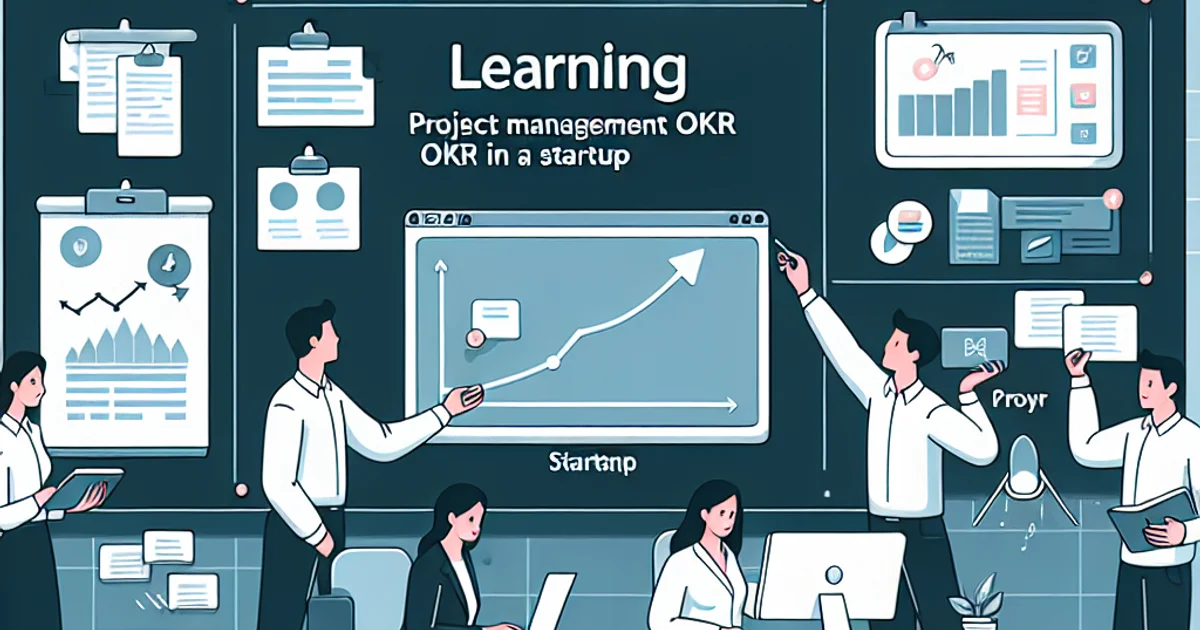
Mastering Project Management with OKRs for Startups
In the fast-paced world of startups, where time and resources are often limited, project management can be a daunting task. The objective is clear: achieve ambitious goals with efficiency and precision. Enter OKRs (Objectives and Key Results), a method that has gained traction among startups for its ability to focus efforts and drive results. This guide is designed for startup founders and small teams looking to leverage projektstyring med OKR for startups.
The Practical Framework
Implementing OKRs in a startup requires a clear, step-by-step workflow that aligns with the dynamic nature of new ventures. Here’s a practical framework to follow:
- Define Objectives: Start with what your startup wants to achieve. Objectives should be ambitious yet achievable. For example, a tech startup might aim to 'Launch a new product feature that captures user engagement'.
- Identify Key Results: Each objective should have measurable results. These could be specific metrics like 'Increase user engagement by 20% in Q1'.
- Align with Team Goals: Ensure that every team member understands how their work contributes to the OKRs. Regular team meetings can facilitate this alignment.
- Implement Tools: Use project management tools that integrate OKR tracking. This helps in visualizing progress and maintaining focus.
- Monitor Progress: Regular check-ins are essential. These can be weekly or bi-weekly meetings where progress on key results is discussed.
- Review and Reflect: At the end of the cycle, review what was achieved, what was not, and why. This reflection is crucial for learning and adaptation.
Each step in this process is vital. Defining objectives sets the direction, while key results provide measurable targets. Aligning team goals ensures everyone is working towards the same end, and using the right tools helps in maintaining clarity and focus.
Example Scenarios
Consider a startup with a team of five, aiming to increase their app's user base. Their objective might be 'Expand user base by 30% in six months'. Key results could include 'Increase marketing reach by 50%', 'Launch a referral program', and 'Enhance app features'. The startup faces the challenge of limited marketing budget and resources. In this scenario, the team prioritizes low-cost marketing strategies, such as leveraging social media platforms and creating engaging content. They also focus on improving user experience based on feedback to encourage organic growth.
Another scenario involves a health-tech startup aiming to 'Improve patient engagement by 40%'. With a small team dedicated to both development and user engagement, their key results focus on 'Developing a patient feedback system', 'Increasing content on health tips', and 'Enhancing direct communication through app updates'. The startup must balance development time with user interaction efforts, often requiring team members to wear multiple hats and work cross-functionally.
Common Mistakes
In practice, startups often make several mistakes when implementing OKRs:
- Setting Vague Objectives: Objectives that are not clearly defined can lead to confusion and lack of focus. Ensure objectives are specific and actionable.
- Overloading with Key Results: Having too many key results dilutes focus. Stick to 3-5 key results per objective.
- Ignoring Team Alignment: Without aligning team goals with OKRs, efforts may become fragmented. Regular communication is key.
- Neglecting Regular Reviews: Skipping progress reviews can lead to unmet goals. Set a consistent review schedule.
- Focusing Only on Targets: Ignoring the learning and adaptation process can hinder growth. Use OKRs as a tool for continuous improvement.
Options & Trade-offs
When adopting OKRs, startups have several approaches to consider. One approach is integrating OKRs into existing project management frameworks like Agile. This can enhance flexibility but may require additional coordination to ensure alignment. Another option is a standalone OKR system, providing clear focus but potentially creating silos if not well integrated with daily tasks.
Choosing the right approach depends on the startup's size, culture, and existing processes. Agile integration works well in iterative environments but might overwhelm teams unfamiliar with Agile. A standalone system offers clarity but requires disciplined coordination to avoid fragmentation.
Timeline & Effort
Implementing OKRs typically unfolds in phases:
- Preparation: Takes 1-2 weeks. Involves defining objectives and key results, training teams, and selecting tools.
- Execution: Spans 3-6 months. Teams work towards meeting key results, with regular check-ins for course corrections.
- Review: Lasts 1-2 weeks. Involves assessing outcomes, learning from successes and failures, and planning the next OKR cycle.
Bottlenecks often arise during the execution phase due to shifting priorities or resource constraints. Maintaining flexibility and open communication can mitigate these challenges.
Costs
Cost considerations for implementing OKRs vary widely. Basic implementation may require minimal financial outlay, focusing instead on time investment. However, as teams grow, investing in dedicated OKR management tools can enhance efficiency. Costs can range from free tools to premium software subscriptions, depending on the features and scale needed.
Factors influencing costs include team size, the complexity of objectives, and integration needs with existing systems. Startups must weigh these factors against the potential return on investment from achieving their objectives.
Wrap-up & Next Steps
To successfully implement projektstyring med OKR for startups, consider the following steps:
- Define clear, ambitious, yet achievable objectives aligned with your startup's mission.
- Identify measurable key results that directly contribute to these objectives.
- Ensure team alignment through regular communication and shared understanding of goals.
- Monitor progress consistently and adjust strategies as needed based on feedback and outcomes.
- Reflect on each cycle to learn and improve future implementations.
For more insights on project management tools and methods, explore the features offered at foundbase.io.
By adopting OKRs, startups can navigate the complexities of project management with a focused, results-driven approach that fosters growth and innovation.
Frequently asked questions
Q: How can OKR help startups with project management?
OKR can assist startups by providing a clear focus on the most important objectives, creating alignment and direction. It helps the team understand what needs to be achieved and what success looks like, making it easier to prioritize tasks and allocate resources effectively.
Q: What are the initial steps to implement OKR in a startup?
Initial steps include defining clear and measurable Objectives and associated Key Results. It's crucial to involve the entire team in the process to ensure everyone is aligned and understands their role in achieving the goals.
Q: What challenges might startups face when using OKR?
Startups might face challenges such as setting too many objectives, which can lead to confusion and a lack of focus. It's also important to ensure that the objectives are realistic and achievable to keep the team motivated.
Related guides

Project management for freelance teams: Expert strategies
Learn how to effectively manage projects for freelance teams. Discover best practices and tools for successful collaboration.
Rasmus Rowbotham
Project management for small teams: Effective strategies
Learn how small teams can enhance their project management skills. Gain insights into effective strategies and tools to overcome challenges.
Rasmus Rowbotham
Kanban project management for startups: boost efficiency
Discover how kanban project management can transform your startup. Gain insights into visual management and how to apply the kanban method to enhance team efficiency.
Rasmus Rowbotham