crm personalization for Danish startups: boost sales
Explore crm personalization for Danish startups. Enhance user experience and boost sales. Start customizing today.

Rasmus Rowbotham
Founder of Foundbase and experienced entrepreneur with over 10 years of experience in building and scaling businesses.
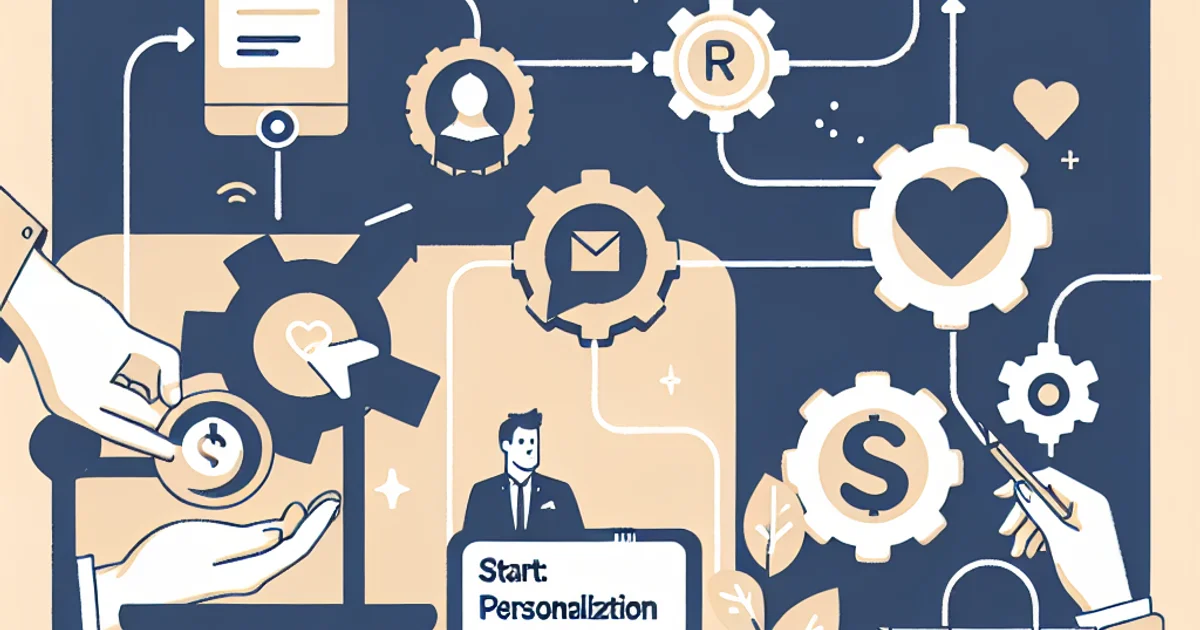
CRM Personalization for Danish Startups: A Tailored Approach
For Danish startups looking to gain a competitive edge, CRM personalization isn't just a buzzword—it's a strategic necessity. This guide is crafted for founders and small teams eager to leverage CRM systems to create deeply personalized customer interactions. By focusing on specific Danish market dynamics and startup constraints, this guide offers actionable insights tailored to help you avoid potential pitfalls and optimize your CRM for personalized sales strategies.
The Practical Framework
Implementing CRM personalization in a Danish startup involves a structured approach that balances customization with scalability. Here’s a step-by-step workflow to guide you through:
1. Define Your Customer Segments
Start by identifying distinct customer segments based on demographics, behavior, and preferences. This is crucial as it allows your CRM to deliver tailored experiences. In practice, many startups use initial market research and existing customer data to carve out these segments.
2. Map Out Customer Journeys
Develop detailed customer journey maps for each segment. This helps in understanding touchpoints where personalization can make the most impact. A common pattern is to highlight key interaction points such as onboarding, support, and follow-up communications.
3. Select CRM Features for Personalization
Choose specific CRM features that support personalization, like automated email workflows, customizable dashboards, and advanced segmentation tools. These features enable Danish startups to tailor interactions without adding complexity to their workflows.
4. Integrate Data Sources
Ensure your CRM is integrated with other data sources such as web analytics, social media, and customer feedback tools. This integration fuels personalization efforts by providing a holistic view of customer interactions.
5. Test and Iterate
Implement A/B testing for different personalization strategies to gauge what resonates with your audience. Iterative testing helps refine approaches and ensures that your personalization efforts yield tangible results.
Example Scenarios
Consider two mini-cases that illustrate how personalization can be implemented in practice:
Case 1: The Health Tech Startup
A health tech startup with a team of five is looking to improve user engagement. By segmenting their users into different health goals, they tailor content and notifications to each segment. This approach boosts user engagement and retention without expanding their team.
Case 2: The E-commerce Platform
An e-commerce startup with a small budget needs to increase conversion rates. They implement personalized product recommendations and targeted email campaigns based on browsing history. This strategy increases the average order value and customer loyalty without substantial marketing spend.
Common Mistakes
Even with a solid plan, several pitfalls can derail CRM personalization efforts. Here are five common mistakes and how to avoid them:
1. Overcomplicating Personalization
Personalization doesn’t mean overwhelming complexity. Startups often try to personalize every interaction, which can lead to execution challenges. Focus on high-impact areas first.
2. Ignoring Data Quality
Without accurate data, personalization efforts can backfire. Regularly clean and update your CRM data to ensure it's reliable and actionable.
3. Not Aligning with Business Goals
Personalization should align with overarching business objectives. Ensure that CRM strategies support key growth targets, such as customer acquisition or retention.
4. Failing to Train the Team
Technical barriers can arise if team members aren’t adequately trained on CRM tools. Invest in training sessions to bring everyone up to speed.
5. Neglecting Customer Feedback
Failing to incorporate customer feedback can result in missed personalization opportunities. Use surveys and direct feedback to continuously refine your approach.
Options & Trade-offs
There are several approaches to CRM personalization, each with its own trade-offs:
1. Off-the-Shelf Solutions
These are ideal for startups with limited resources but may lack deep customization. They often work well for early-stage startups needing rapid deployment.
2. Custom-Built CRMs
Custom solutions offer high personalization but require significant investment and technical expertise. Suitable for startups with specific needs and resources.
3. Hybrid Approaches
Combining off-the-shelf tools with custom plugins can offer a balanced solution. This approach provides flexibility but requires careful integration management.
Timeline & Effort
Implementing CRM personalization typically unfolds in phases:
Phase 1: Planning and Setup (1-2 months)
This phase involves setting goals, selecting tools, and planning integrations. Expect bottlenecks in data integration and team training.
Phase 2: Execution and Testing (2-4 months)
Deploy personalization strategies and begin testing. Continuous iteration based on feedback is crucial here.
Phase 3: Optimization and Scaling (ongoing)
Once initial strategies prove successful, focus on optimization and scaling efforts. Regularly revisit and adapt strategies to align with evolving business goals.
Costs
Costs associated with CRM personalization can vary significantly:
1. Software Licensing
Costs range widely depending on the CRM platform and necessary features. Startups typically find tiered pricing models most accessible.
2. Implementation
Custom integrations and setup can be costly, especially if external consultants are needed. Budgeting for initial and ongoing training is also important.
3. Maintenance
Regular updates and data maintenance require dedicated resources, impacting ongoing operational costs.
Wrap-up & Next Steps
To succeed in CRM personalization, Danish startups should:
- Define clear customer segments and map their journeys.
- Select CRM features that align with personalization goals.
- Integrate multiple data sources for a unified customer view.
- Continuously test and refine personalization strategies.
- Align personalization efforts with business objectives.
For a comprehensive suite of CRM features tailored to startups, explore Foundbase CRM as a potential solution.
Frequently asked questions
Q: How can CRM personalization boost sales for Danish startups?
CRM personalization can boost sales by tailoring the customer experience to better meet individual needs and preferences. This leads to higher customer satisfaction and loyalty, ultimately increasing sales.
Q: What CRM tools are best for personalization for Danish startups?
For Danish startups, tools like HubSpot, Salesforce, and Pipedrive are effective for CRM personalization. These platforms offer features that allow for customer segmentation and tailored communication based on data.
Q: What are the main challenges of CRM personalization for Danish startups?
One of the main challenges is having sufficient data to personalize effectively. Additionally, implementing advanced CRM features can require resources and technical expertise that some startups may lack.
Related guides

crm for remote sales teams: boost collaboration
Learn how crm for remote sales teams can transform your team. Streamline collaboration and increase productivity with our expert guide.
Rasmus Rowbotham
crm sales strategies for small teams: boost efficiency
Explore effective crm sales strategies tailored for small teams. Enhance your sales outcomes with our expert guide and practical tips.
Rasmus Rowbotham
crm analytics for startups: boost your growth
Dive into expert-level crm analytics for startups. Learn strategies to improve your sales efforts and gain valuable data insights.
Rasmus Rowbotham