crm integration trends 2025: insights and benefits
Discover crm integration trends 2025 and explore future integrations. Sign up to learn about tools and benefits today.

Rasmus Rowbotham
Founder of Foundbase and experienced entrepreneur with over 10 years of experience in building and scaling businesses.
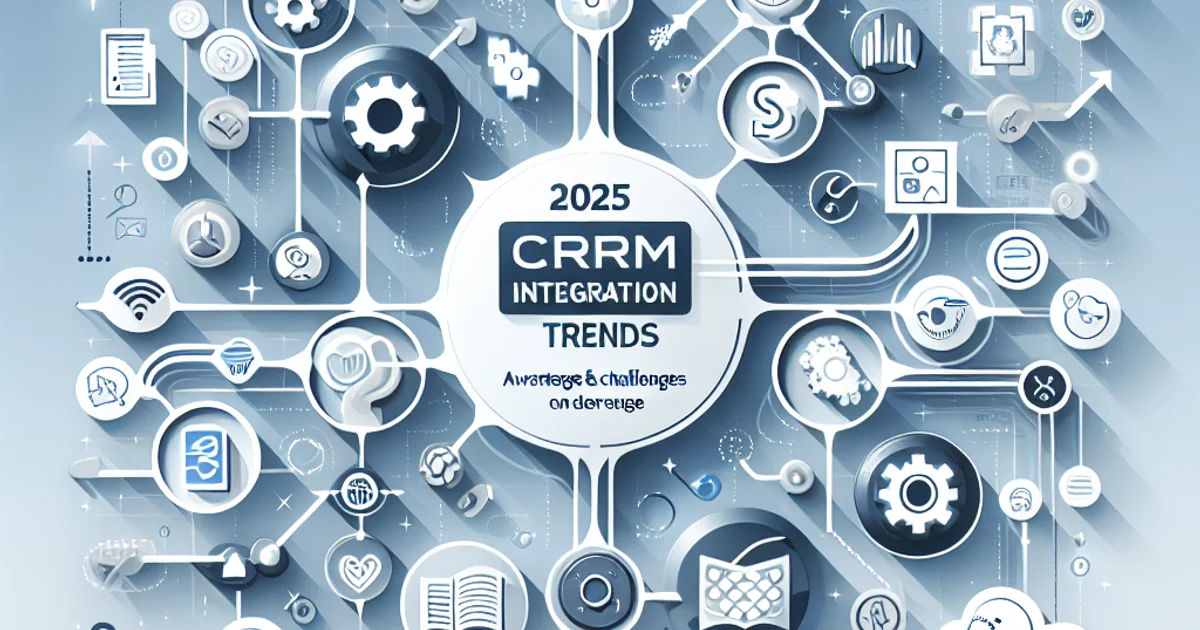
CRM Integration Trends 2025: A Practical Guide for Startups
For founders and small teams navigating the complex landscape of CRM integration, the next few years promise significant changes. As we approach 2025, the focus shifts towards seamless interoperability, real-time data processing, and AI-driven insights. This guide is crafted specifically for those in the trenches of startup life, grappling with limited resources and an urgent need for effective CRM solutions. By diving deep into the emerging trends, this guide will help you make informed decisions, avoid common pitfalls, and harness the full potential of CRM integrations.
The Practical Framework for CRM Integration
Integrating your CRM system effectively involves a series of deliberate steps, each crucial in maintaining data integrity and ensuring operational efficiency. Here’s a practical workflow to guide your process:
- Identify Core Needs: Start by pinpointing what your business genuinely requires from a CRM integration. Is it improved customer insights, enhanced marketing automation, or better sales tracking? Clarifying these needs will steer all subsequent decisions.
- Select the Right Tools: Choose CRM systems and integration tools that align with your identified needs. Consider platforms known for robust integration capabilities, such as HubSpot or Salesforce, to ensure flexibility and scalability.
- Map Existing Processes: Document current workflows to understand how data flows through your systems. This step is critical to identify bottlenecks and areas where integration can provide significant improvements.
- Develop a Data Strategy: Decide on data sources, structure, and governance. Establish protocols for data entry, management, and privacy to maintain a clean and compliant data environment.
- Design the Integration Architecture: Create a blueprint for how systems will connect and communicate. This involves defining APIs, middleware, and other components that will facilitate smooth data exchange.
- Test and Validate: Conduct rigorous testing phases to ensure integrations work as intended. Use real-world scenarios to validate performance and reliability.
- Train and Onboard Teams: Provide comprehensive training to ensure all team members understand the new system and processes. Effective onboarding minimizes resistance and maximizes adoption.
- Monitor and Optimize: Post-launch, continuously monitor system performance and user feedback. Use these insights to make iterative improvements and address any emerging issues.
Example Scenarios
To illustrate these principles, consider two startups at different stages of CRM integration:
Scenario 1: The Early-Stage Startup
A tech startup with a team of five is looking to streamline their customer engagement and sales processes. With limited funds, they prioritize a CRM solution that offers basic integration with their existing email marketing tool. They opt for a free-tier CRM that supports essential integrations, enabling them to automate lead nurturing and track customer interactions without overwhelming their budget.
Scenario 2: The Growth-Phase Startup
Another startup, now with twenty employees, is experiencing rapid growth. Their focus is on enhancing customer insights and automating complex workflows. They choose a mid-tier CRM with robust API support and invest in custom integrations with their proprietary software. This allows them to unify customer data across platforms, enabling personalized marketing and sales strategies.
Common Mistakes in CRM Integration
Even with a solid plan, startups often stumble into pitfalls during CRM integration. Here’s a look at typical mistakes and how to avoid them:
- Overlooking User Training: Without proper training, even the best systems fail. Ensure user-friendly training materials and ongoing support are part of your integration plan.
- Neglecting Data Cleanliness: Integrating unclean data leads to inaccurate analytics and decision-making. Regularly audit your data for duplicates, errors, and outdated information.
- Underestimating the Complexity: Many assume integration is a simple plug-and-play process. Acknowledge potential complexities, especially when dealing with legacy systems or custom applications.
- Lack of Clear Objectives: Without clear goals, integrations can drift off course. Define specific, measurable outcomes you expect from the integration process.
- Ignoring User Feedback: User feedback is invaluable for identifying issues and areas for improvement. Establish channels for collecting and acting on this feedback continuously.
Options & Trade-offs
Choosing the right approach for CRM integration involves weighing various options and their trade-offs:
- DIY vs. Professional Services: DIY integration can be cost-effective but risky if lacking expertise. Professional services offer reliability but at a higher cost. Consider your team’s technical capabilities and budget constraints.
- Pre-built Tools vs. Custom Solutions: Pre-built tools offer faster deployment times while custom solutions provide tailored functionality. Evaluate the complexity of your needs and the flexibility each option offers.
- Cloud-based vs. On-premise: Cloud solutions offer scalability and ease of management, whereas on-premise may provide better data control. Factor in your security needs and growth projections.
Timeline & Effort
Implementing a CRM integration can be broken down into distinct phases, each with its own timeline and effort:
- Phase 1: Planning and Selection (1-2 months): Focus on needs analysis, tool selection, and process mapping. This phase requires cross-departmental collaboration and strategic planning.
- Phase 2: Implementation (2-4 months): Involves setting up the integration architecture, developing data strategies, and conducting initial tests. Technical challenges and unforeseen complexities can prolong this phase.
- Phase 3: Testing and Training (1-2 months): Comprehensive testing ensures all components function correctly. Concurrently, training sessions prepare your team for the transition.
- Phase 4: Launch and Optimization (Ongoing): Post-launch, focus on monitoring performance and making iterative improvements. Be prepared for ongoing adjustments as business needs evolve.
Costs
CRM integration costs vary widely based on several factors:
- Complexity of Integration: More complex integrations, involving multiple systems and custom development, naturally incur higher costs.
- Tool and Service Selection: Premium CRM platforms and professional integration services command higher prices compared to basic tools and DIY approaches.
- Ongoing Maintenance: Budget for continuous monitoring and optimization post-integration, including potential upgrades and additional training needs.
Wrap-up & Next Steps
Successfully navigating CRM integration trends in 2025 requires a blend of strategic planning, informed decision-making, and adaptability. Here’s a concise action plan:
- Clarify your integration goals and prioritize needs.
- Select tools and services that align with your strategic vision.
- Invest in comprehensive training and establish feedback loops.
- Monitor and optimize your integrations continuously.
- Stay informed on emerging trends to maintain competitive advantage.
For more insights into CRM features and integrations, explore further options at Foundbase CRM Features.
Frequently asked questions
Q: What CRM integration trends can we expect in 2025?
In 2025, we can expect an increase in AI-driven CRM integrations, enabling more personalized customer experiences. Additionally, there will be a greater focus on real-time synchronization and the use of open APIs to facilitate easier integration with other systems.
Q: How can businesses benefit from future CRM integrations?
Businesses can benefit from future CRM integrations by achieving more streamlined workflows, improved data accuracy, and a deeper understanding of customer behavior. This can lead to better decision-making and increased customer satisfaction.
Q: What are the major challenges of CRM integration in 2025?
One of the major challenges of CRM integration in 2025 will be ensuring data security and privacy, especially with the increasing amount of data shared between systems. Additionally, the complexity of integrating different technologies can also pose a challenge.
Related guides
crm implementation roadmap for startups: expert guide
Learn how to effectively implement CRM in your startup. This guide covers adoption strategies, onboarding best practices, and success factors for small teams.
Rasmus Rowbotham
crm customization for small teams: maximize your system
Learn how small teams can benefit from tailored CRM customization. Enhance collaboration and efficiency with our expert insights.
Rasmus Rowbotham
crm integration best practices: boost efficiency
Learn expert-level CRM integration best practices to enhance your business efficiency. Avoid common integration challenges with our professional tips.
Rasmus Rowbotham