CRM Automation Framework: Build a Data-Driven Sales Engine That Runs 24/7
Learn how to build a CRM automation flow that minimizes manual work, boosts conversion rates, and runs your sales 24/7.

Rasmus Rowbotham
Founder of Foundbase and experienced entrepreneur with over 10 years of experience in building and scaling businesses.
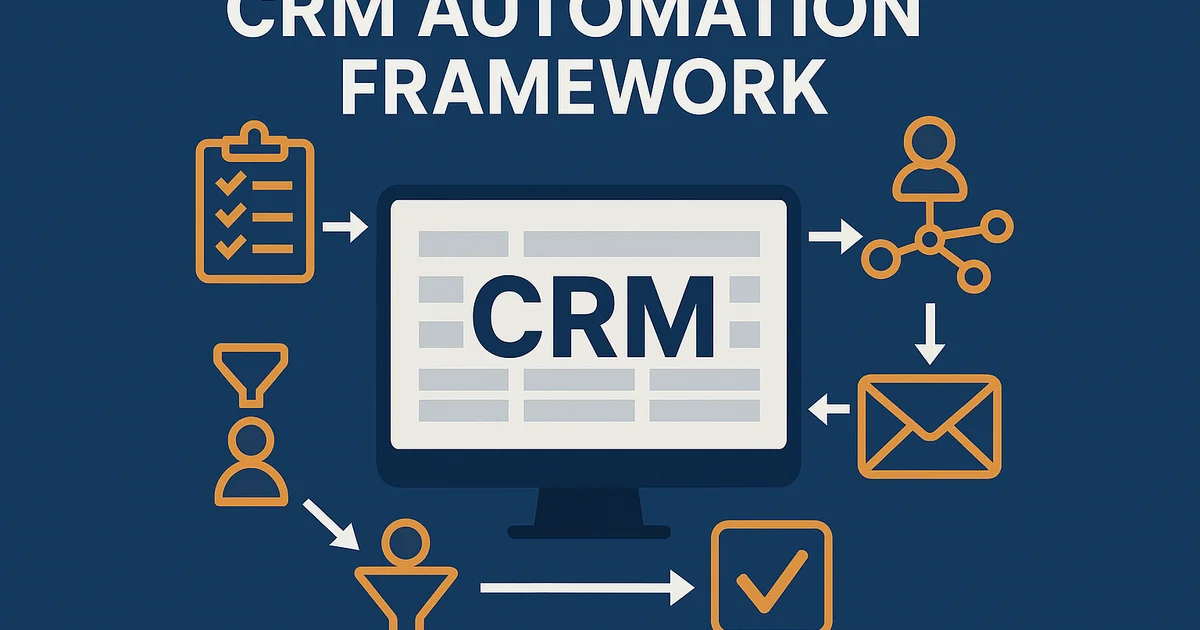
Why Automation Is the Ultimate Advantage in CRM Sales
After 15 years optimizing CRM systems, one truth remains: top-performing sales teams use automation not to replace humans but to amplify them. A CRM without automation is like a high-performance car stuck in first gear — you can move, but never scale efficiently.
Step 1: Map Out Every Manual Process
Document everything your team does repeatedly. Common examples include:
- Following up with unresponsive leads
- Manual lead qualification
- Pipeline stage updates
- Pre-meeting reminders
Tag each step as: Automate, Semi-Automate, or Keep Manual. This creates an instant automation roadmap.
Step 2: Build a Layered Automation Framework
In CRMs like HubSpot, Pipedrive, or Zoho, build layered workflows for maximum impact:
- Lead capture: Auto-track source (UTM + form data)
- Lead scoring: Behavior-based points (email opens, page visits)
- Task creation: If lead score >70 → assign follow-up task
- Pipeline automation: Proposal viewed >3 times → move to Negotiation
- Post-sale automation: Send onboarding email + schedule 30-day check-in
This setup alone can eliminate up to 60% of manual actions in your CRM.
Step 3: Use Conditional Logic for True Personalization
Automation isn’t about blasting identical emails. Use if/then logic to keep your messaging relevant:
IF lead_type = Enterprise → Send Series A (ROI + Security)
ELSE IF lead_type = SME → Send Series B (Implementation Speed)
ELSE → Send Series C (Demo Invitation)
This structure often increases engagement rates by 40% or more.
Step 4: Integrate Systems for Real Data Flow
The most powerful automations occur when your CRM connects to your entire stack:
- Marketing: HubSpot ↔ Meta/LinkedIn Ads for synced audiences
- Support: CRM ↔ Helpdesk for proactive churn reduction
- Finance: CRM ↔ Accounting software for real-time revenue tracking
Now your CRM becomes your company’s single source of truth.
Step 5: Create a Continuous Feedback Loop
Set monthly reports to measure automation impact:
- Email open and reply rates
- Pipeline velocity (days from lead to close)
- Manual actions per deal
If an automation doesn’t shorten cycle time or improve conversion — remove it.
Case Study: SaaS Startup Scaled Without Hiring
A Copenhagen-based SaaS company implemented this exact framework. In just 90 days:
- +43% faster lead response
- −52% manual CRM work
- +28% higher close rate
Automation didn’t replace their team — it made them unstoppable.
Conclusion
Your CRM isn’t just a database — it’s your growth engine. When you combine automation logic, data-driven triggers, and human insight, your sales system becomes a 24/7 performer — freeing your team to focus on what matters most: closing deals and building relationships.
Related guides
Crm customer feedback integration: enhance your strategy
Discover how to integrate customer feedback into your CRM system to enhance customer satisfaction and refine your strategy.
Rasmus Rowbotham
crm adoption strategies for startups: success
Unlock the secrets to effective crm adoption strategies for startups. Overcome challenges and implement successfully with our expert guide.
Rasmus Rowbotham
crm for remote startups: boost your sales
Learn how crm for remote startups can optimize your team's collaboration and sales. Get insights into the best tools and strategies.
Rasmus Rowbotham